The Brave Few Crew Roles & Specialisations
Seven roles, dual specialisations, XP, and persistent single-player crews explained for Early Access.
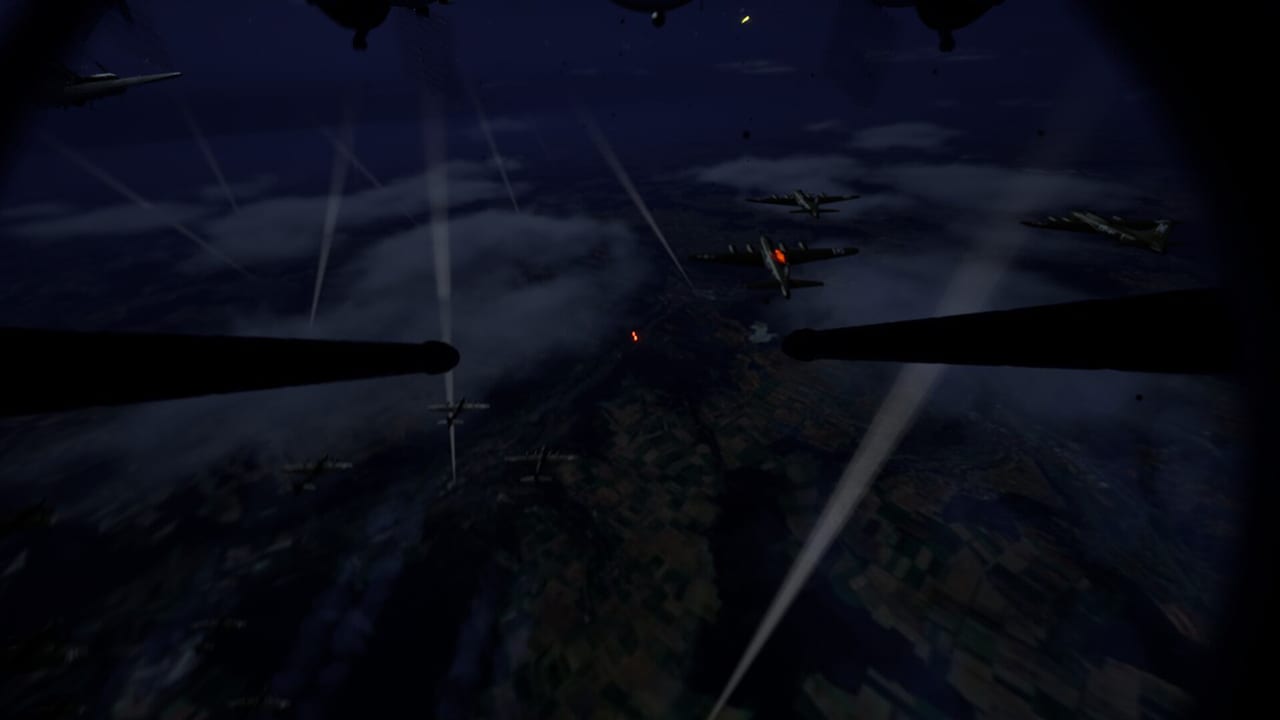
Every successful mission in The Brave Few starts with the right person in the right seat. Early Access defines seven crew roles, each with two specialisations, spanning the B-17F bomber and P-51D escort work. Character XP and role XP both rise every mission in co-op and single player. Levelling makes a crewman measurably better — tighter bursts, faster reactions, cooler guns, and more time before a hit takes him out of the fight. This guide explains each role, how specialisations split, how persistent single-player crews work, and how to pick a first seat. Pair it with How to Play Co-op, the Gunner Guide, Survive Flak, and the crew roles tier.
Steam About text sometimes summarises “six roles with two sub-roles”; the detailed Early Access list names seven: Pilot, Gunner, Navigator, Flight Engineer, Medic, Bombardier, and Radio Operator. We follow that seven-role roster here.
Pilot (Bomber or Fighter)
Pilot specialises as Bomber or Fighter. Bomber pilots own the Fortress: throttles across four individually modelled engines, formation position, and the decision to press, abort, or order bail-out when wings or controls fail. Fighter specialists take the P-51D escort — energy fighting, staying near the box, and calling when they leave to chase. Pilot rank runs 0–9, with a separate 0–4 rank per aircraft, so time in type matters.
Bomber pilots should know Arcade versus Realistic handling and when to ask Engineer for engine fires instead of staring at the panel alone. Fighter pilots should read enemy threat so they respect Fw 190 and Me 410 passes that threaten the formation more than a lone chase kill.
Navigator
Navigator keeps the mission oriented across streamed real terrain, briefing objectives, and the mission clock. In a crew with noisy radios and damaged instruments, a dedicated Navigator reduces “where is the IP?” panic before the bomb run. Specialisations (per the two-per-role design) let you lean into route craft versus tactical awareness — practise both in tutorials from Getting Started.
Navigators thrive when they speak early: time to flak belt, time to target, and rejoin cues after the box breaks. Link calls with the Radio Operator so escorts and waist gunners hear the same clock.
Bombardier
Bombardier owns the run: arm bombs and use the Norden bombsight to hit targets. Leaving the sight to fight a fire is sometimes necessary; leaving it because nobody stocked a Medic is how you miss the objective. Coordinate with Pilot for steady platforms and with Gunners for nose/cheek coverage while you are heads-down.
On co-op nights, claim Bombardier explicitly in the crew room so two players do not both expect the sight. Custom difficulty that disables job sequences can simplify training runs, but real missions expect you to balance sight time against damage jobs.
Radio Operator
Radio Operator sits on communications and the radio-room gun. You are the bridge between escort chatter, formation calls, and internal damage reports. VOIP already carries a radio filter; role fantasy and practical duty align — keep calls short, relay Pilot intent, and man the radio-room gun when fighters slash through.
In public Quick Match crews, a good Radio Operator prevents three people from shouting different clock positions. See co-op tips for phrase discipline.
Flight Engineer
Flight Engineer (Mechanic-minded progression in the wider vision) lives for the damage model: per-engine fires, wing and fuselage patches, fuse box work, and knowing which repair keeps you in formation versus which only delays a crash. Jobs cost gun coverage — when you leave a station, that gun goes quiet. Announce before you move.
Engineers should memorise walkable fuselage paths to critical objects. Unlimited aircraft health in custom difficulty teaches nothing; practise real fires on Easy/Normal until muscle memory sticks. Survive Flak is mandatory reading.
Medic
Medic treats and revives crewmates hit by fighters or flak splinters. Patching a wound means leaving your gun; ignoring a downed waist gunner means a silent beam when the next 109 arrives. Med kit location literacy matters as much as aim.
Medics shine on Hard and Veteran where crew health is not unlimited. In single player, saving a high-level gunner from a treatable wound protects months of XP — replacements arrive at level one if someone is lost on bail-out.
Gunner
Gunner covers the eight stations plus flexible swaps: cheek guns, nose gun, top turret, ball turret, waist guns, radio-room gun, and tail. Specialisations let you emphasise different arcs or discipline styles. Full station tactics live in the Gunner Guide; role XP here pays into tighter bursts and cooler guns as you level.
Gunners must still leave seats for fires and wounded when the crew is short on Engineer/Medic bodies. Pure turret egos lose airframes.
Progression, persistence, and monetisation
Both your character and the role you fly earn XP every mission. Levelling improves measurable combat stats. In single player, crews are persistent: named men with service records, kills, wounds, and nicknames. A man is lost only if downed during bail-out; a replacement arrives at level one. That permanence makes reckless exits expensive.
Monetisation stance from Indub: one purchase, no premium currency, no battle pass, no paid unlocks, no ads. Role strength comes from flying, not wallets. Track feature unlocks over Early Access (~1 year planned) on the Early Access roadmap and Updates.
How to choose tonight’s seat
| Goal | Start here |
|---|---|
| Learn the airframe | Pilot (Bomber) on Arcade + Easy/Normal |
| Learn lead and arcs | Gunner — see Gunner Guide |
| Learn damage triage | Flight Engineer + Survive Flak |
| Learn bomb runs | Bombardier with a patient Pilot |
| Learn escort | Pilot (Fighter) in the P-51D |
| Learn crew saves | Medic on Hard once basics click |
| Learn coordination | Radio Operator or Navigator on a full human crew |
Compare relative priority on the crew roles tier. For first-hour setup, return to Getting Started; for hosting, use How to Play Co-op. Hardware and binds: Tools, controls, system requirements. Community links: Links. Player culture: Players.
Crew roles in The Brave Few are not cosmetic classes. They are jobs with opportunity cost — every heal, every repair, every second on the Norden sight is a second a gun stays quiet. Pick a specialisation, level it honestly, and bring the named roster home.
Frequently Asked Questions
Quick answers for Early Access crews.
How many crew roles are in Early Access?
Seven: Pilot (Bomber or Fighter specialisations), Navigator, Bombardier, Radio Operator, Flight Engineer, Medic, and Gunner — each with two specialisations.
Do roles level separately from my character?
Yes. Both your character and the role you fly earn XP each mission in co-op and single player, improving concrete performance stats as you rank up.
What happens if a single-player crewman dies?
A man is lost only if downed during bail-out. Replacements arrive at level one, so protecting veterans through treatable wounds and sane exits matters.
Can AI cover roles I do not fill?
AI crewmen hold every seat a player is not in, including when you fly solo or run a small human crew in co-op.
Which role is best for complete beginners?
Gunner or Pilot (Bomber) on Arcade/Normal teaches stations and flight without instant triage pressure. Add Engineer or Medic once you know the fuselage layout.